
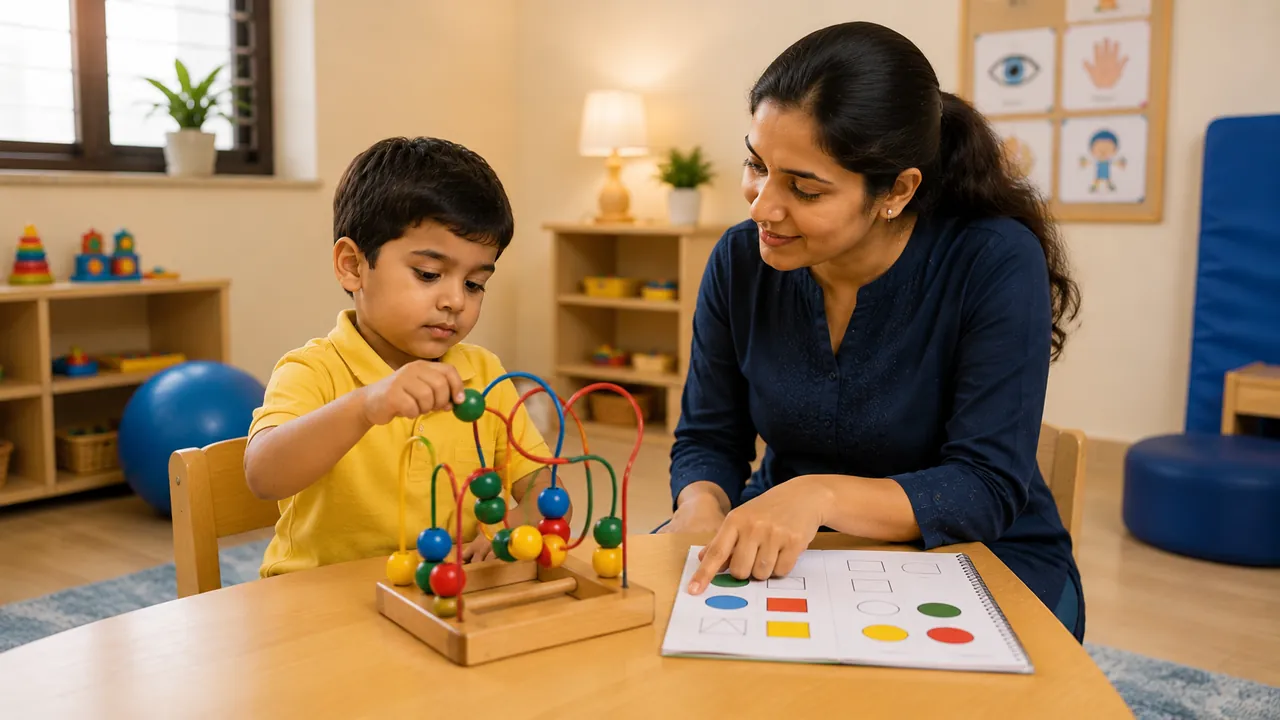
Stammering — also called stuttering — is a disruption in the flow of speech. The child repeats sounds or syllables ("b-b-ball"), prolongs sounds ("ssssoup"), or gets stuck and cannot get the word out at all. For many children aged 2–5, some degree of dysfluency is entirely normal as their language develops faster than their ability to produce speech. But when does normal developmental dysfluency become true stammering — and when does it need professional help?
Normal Dysfluency vs. True Stammering
Between ages 2 and 5, it is common for children to repeat words or phrases ("I want-I want-I want some water"), hesitate, or occasionally get stuck. This is known as developmental dysfluency and is not cause for immediate concern. Most children pass through this phase naturally.
True stammering is different in quality and impact. Signs that suggest something beyond normal developmental dysfluency include:
- Repetitions of individual sounds or syllables rather than whole words ("b-b-b-ball" not "ball-ball-ball")
- Sound prolongations ("mmmmum") or complete blocks where no sound comes out at all
- Physical tension visible in the face, neck, or lips when trying to speak
- Secondary behaviours: blinking rapidly, facial grimacing, tapping, or avoiding eye contact when speaking
- Avoiding speaking situations — refusing to answer in class, not wanting to talk on the phone
- Expressing frustration or distress about their speech ("I can't talk properly")
- A family history of stammering
When Should You Seek Professional Assessment?
Seek a speech therapy assessment if any of the following apply:
- Stammering has persisted for more than 6 months without improvement
- The child started stammering after age 3.5 (late-onset stammering is less likely to resolve naturally)
- The stammering is getting progressively worse, not better
- The child shows emotional distress about their speech
- There is physical tension or secondary behaviour associated with speech attempts
- A parent is worried — parental instinct is a valid reason to get an assessment
The window between ages 2–6 is when stammering is most responsive to intervention. Acting during this period gives children the best chance of achieving fluent speech.
Concerned About Your Child's Stammering?
At Kocoon Junior, our speech therapists have specialised training in childhood stammering and dysfluency. A free 30-minute consultation will help you understand what is happening and whether intervention is the right next step.
Book Free Speech Therapy Consultation →What Causes Stammering?
Stammering has a strong genetic component — approximately 60% of people who stammer have a family member who stammers. Brain imaging research has identified specific differences in the neural circuits involved in speech production in people who stammer. It is not caused by anxiety, nervousness, trauma, or poor parenting — though these factors can make existing stammering worse.
Stammering is slightly more common in boys than girls (roughly 3:1 ratio). Boys are also less likely to recover naturally without intervention.
What Does Stammering Therapy Involve?
Treatment approaches depend on the child's age and the nature of their stammering. At Kocoon Junior, our speech therapists use evidence-based approaches including:
For younger children (2–6 years): Indirect approaches
Young children respond best to indirect therapy approaches that change the communication environment rather than focusing directly on speech. The Lidcombe Programme is one of the most researched approaches for this age group — it is parent-implemented with guidance from a speech therapist and involves structured, positive feedback at home. Indirect approaches also include slowing the pace of conversations, reducing questions, increasing listening time, and modelling smooth, relaxed speech.
For older children (7+): Direct speech techniques
Older children can benefit from direct techniques that teach strategies for managing stammering — including controlled breathing, easy onset of speech sounds, and pausing. The goal is not necessarily to eliminate stammering entirely, but to reduce its impact and give the child tools to communicate confidently.
The Emotional Side of Stammering
For many children, the emotional impact of stammering — the anticipatory anxiety, the avoidance, the shame — becomes more disabling than the stammering itself. At Kocoon Junior, our speech therapists address both the physical and emotional dimensions of stammering. Building a child's confidence in communication is as important as developing speech fluency.
Children at school in Ahmedabad who stammer often face teasing or impatient teachers. Our team also works with families to advocate for their child in school — ensuring that class participation requirements do not unfairly penalise children who are receiving treatment.
Recovery Rates: Reason for Optimism
Approximately 75–80% of children who stammer naturally recover by adolescence, even without intervention. With early, well-structured intervention this rate is even higher. The key is acting during the critical window rather than adopting a "wait and see" approach that allows the stammering to become entrenched — along with the secondary anxiety and avoidance that accompany it.