
If your child melts down when the seams of their socks are not perfectly straight, screams at the sound of a hand dryer, or refuses to touch playdough — you are probably familiar with being told "they are just being dramatic" or "they need to toughen up." But this is not drama. It is a real neurological pattern called sensory processing difficulty, and it responds remarkably well to occupational therapy.
What Is Sensory Processing?
The human nervous system is constantly receiving information from the environment — through sight, sound, touch, taste, smell, movement, and body position. Sensory processing is the brain's ability to organise and interpret all of this incoming information so that the body can respond appropriately.
For most people this happens automatically and without effort. But for some children, the brain processes sensory information differently — interpreting ordinary sensations as overwhelming, threatening, or alternatively, failing to register them at all. This creates behaviour that puzzles parents and teachers who do not realise there is a neurological explanation behind it.
Signs of Sensory Processing Difficulty
Children with sensory processing difficulties tend to fall into two broad patterns — or sometimes both at different times:
Over-sensitive (sensory avoidance)
- Cannot tolerate clothing tags, seams, or certain fabric textures
- Refuses to touch certain food textures — will not eat anything wet, slimy, or mixed
- Distressed by ordinary sounds (hand dryers, crowd noise, vacuum cleaners)
- Dislikes being touched, even gently — flinches at hugs or accidental contact
- Overwhelmed in busy environments — shopping malls, school canteens, birthday parties
- Extreme reactions to small physical sensations (a tiny scratch becomes catastrophic)
Under-sensitive (sensory seeking)
- Constantly crashing into things, climbing, jumping — seeking intense physical input
- Needs to touch everything and everyone — cannot keep hands to themselves
- High pain threshold — does not react to knocks or bumps that would upset other children
- Puts everything in their mouth well beyond the developmental stage when this is typical
- Seeks very spicy, crunchy, or strongly flavoured foods exclusively
- Constantly making loud noises or seeking to hear very loud sounds
Does This Sound Like Your Child?
Sensory processing difficulties are one of the most common reasons parents come to Kocoon Junior. Our occupational therapists specialise in sensory integration and can assess whether your child's behaviour has a sensory basis — and what to do about it.
Book Free OT Consultation →Why Does This Happen?
Sensory processing difficulty is not caused by bad parenting, lack of discipline, or a child being "spoiled." It arises from differences in how the nervous system processes and integrates sensory signals. It is frequently seen alongside ADHD, autism spectrum disorder, anxiety, and developmental coordination disorder — but it also occurs independently in children who have none of these diagnoses.
The brain circuits responsible for sensory integration are partly genetic and partly shaped by early experience. In some children these circuits are wired differently from birth. In others, limited early sensory experiences or developmental challenges have left gaps in how the brain learns to process input.
How Occupational Therapy Helps
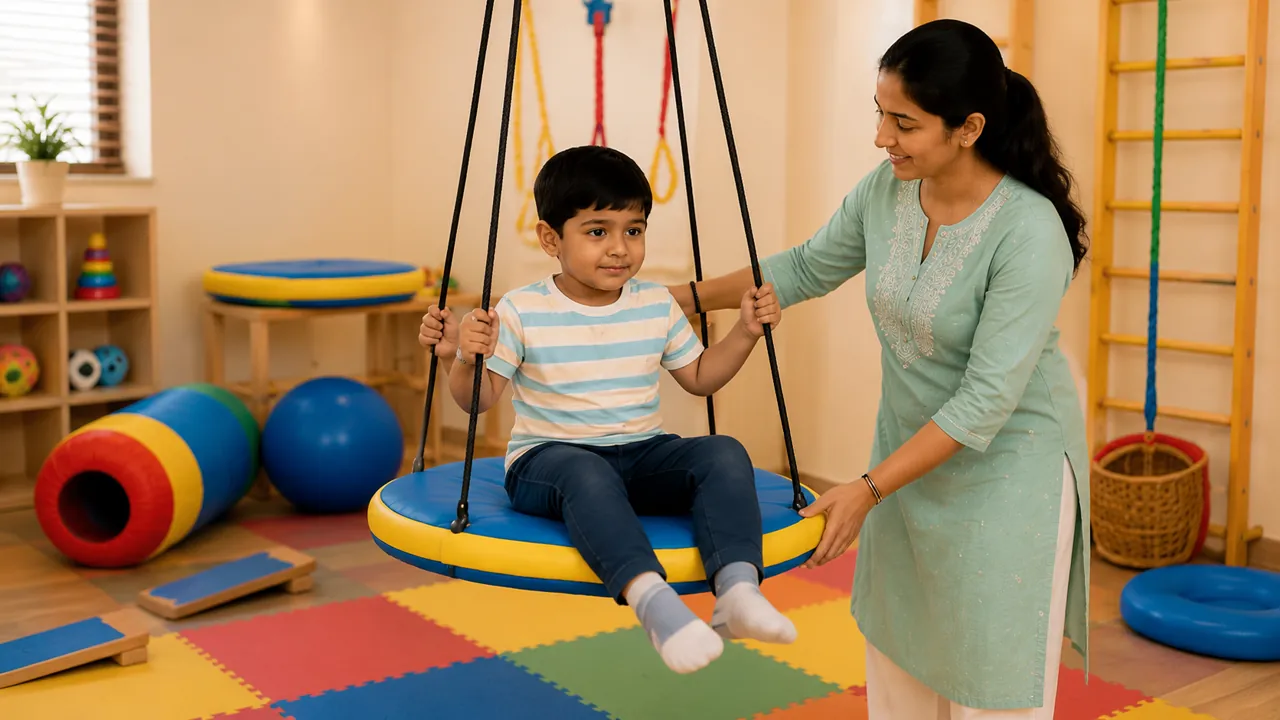
The gold-standard treatment for sensory processing difficulty is sensory integration therapy, delivered by a trained occupational therapist. At Kocoon Junior, our OT sessions use carefully designed sensory experiences — swings, weighted equipment, textured surfaces, proprioceptive activities — to help the nervous system gradually learn to process and organise sensory input more effectively.
This is not desensitisation through force. It is about providing the right type and amount of sensory input in a controlled, playful environment so the brain can gradually recalibrate its responses. Sessions are tailored to the child's specific sensory profile — overstimulation, understimulation, or both.
Equally important is the sensory diet — a personalised set of activities the occupational therapist designs for the family to use at home between sessions. These are practical, low-cost strategies that help regulate the child's sensory system throughout the day: before school, before a challenging activity, or when the child is showing signs of dysregulation.
What Results Can Parents Expect?
With consistent therapy and a good home sensory diet, most children show meaningful improvement. Parents at Kocoon Junior have reported children who previously refused to eat any textured food gradually accepting a wider range; children who could not tolerate clothes with any seams becoming able to dress independently; children who screamed at crowd noise becoming able to manage shopping trips.
Progress is gradual — the nervous system cannot be rewired overnight. But it is real, and it compounds over time. Children who begin sensory integration therapy early — while the brain is most plastic — tend to show the most significant gains.
A Note for Ahmedabad Parents
Sensory processing difficulty is not a well-known concept in all parts of India, and many children in Ahmedabad go unidentified for years — sometimes labelled as "difficult," "fussy," or "attention-seeking." If you recognise your child in this article, a developmental assessment at Kocoon Junior can give you concrete answers and a practical path forward. The first consultation is always free.